
Local SEO · Austin & Round Rock
How Do Local Businesses Get Found on Google in Austin and Round Rock?
Through three things Google weighs for every local search: relevance, distance and prominence. In a metro that added more than 267,000 people between 2020 and 2024, most of them with no plumber, dentist or roofer yet, the businesses that win are the ones whose Google Business Profile, website and reviews make all three obvious.
No contract. No exit fee. Your domain and Google accounts stay in your name.


If you run a service business anywhere between South Austin and Georgetown, your next customer probably doesn’t know you exist yet. Central Texas is still one of the fastest-growing regions in the country, and new residents don’t ask neighbours for a plumber. They pick up their phone and search.
This guide lays out the numbers behind that, how Google actually decides who appears in the map results, why a Round Rock business often can’t show up for a search in Austin, and the specific things that move local rankings here. It’s written from the work we do every week for local businesses from our base in Round Rock.
Why is local search so competitive in Austin and Round Rock?
Short answer: Because the market keeps growing and filling with businesses at the same time. The Austin metro reached about 2.55 million people in 2024, Williamson County is growing at over 3% a year, and every new household is a customer who has to search for services they used to get by word of mouth.
Here are the U.S. Census Bureau estimates for the area, and why each one matters for anyone trying to be found locally.
| Area | Figure | Why it matters for local search |
|---|---|---|
| Austin-Round Rock-San Marcos metro | About 2.55 million people (July 2024), the 25th-largest U.S. metro | A big, crowded market: more searches, and more businesses competing for each one |
| Metro growth since 2020 | 267,251 new residents, nearly 11% | Hundreds of thousands of households choosing a new dentist, plumber or HVAC company by searching |
| Williamson County | 727,480 residents (2024), growing about 3.4% to 3.7% a year | The suburbs north of Austin are where growth, and new-customer searches, are fastest |
| Round Rock | 127,786 residents (July 2024 estimate) | Big enough to support many competitors in every trade, small enough that distance really matters |
| Round Rock households | Median household income of $99,287; median age 36.2 | Homeowners and young families: the core customers for home services, dental, fitness and childcare |
How does Google decide which businesses show up in the map pack?
Short answer: Google says local results are based mainly on relevance, distance and prominence. It also says plainly that there’s no way to pay for a better local ranking.
These are Google’s own words, from its Business Profile help pages. What you can control is how clearly your business signals each one.
| Factor | What Google says it means | What you control |
|---|---|---|
| Relevance | How well a Business Profile matches what someone is searching for | Your primary and secondary categories, the services listed, your business description, and service pages on your website that use the words customers search |
| Distance | How far each business is from the customer who’s searching | Your real address or service area. You can’t move closer to every searcher, which is why the next section matters |
| Prominence | How well known a business is, including how many websites link to it and how many reviews it has | A steady flow of genuine reviews, links and mentions from local sites, and consistent business details across the web |
Why doesn’t my Round Rock business show up for searches in Austin?
Short answer: Distance. When someone in South Austin searches for a service, Google favours businesses near them, so a Round Rock business can rank first in Round Rock and barely appear 20 miles down I-35. Setting a wide service area doesn’t change that.
This is the most common frustration we hear from owners in Williamson County. A service-area business can list the cities it serves, but Google still weighs how far the business is from the person searching. Ticking Austin, Pflugerville, Cedar Park, Leander and Hutto as service areas tells Google where you’ll travel. It doesn’t put you in the map pack for all of them.
What does work across a wider area:
- Organic rankings, not just the map. The regular results below the map pack depend far less on distance. A strong page for “water heater replacement in Pflugerville” can rank there even if your shop is in Round Rock.
- Genuinely useful area pages. One page per area you really serve, with local jobs, photos and details. Google treats near-identical pages with the town name swapped as doorway pages, which can hurt the whole site.
- Paid local ads. Local Services Ads and Google Ads can reach searchers across the metro where the map pack won’t.
- A real second location. Only if you actually staff one. A virtual office or mailbox used as a fake address can get a profile suspended.
How much do Google reviews matter for local businesses here?
Short answer: A lot, for rankings and for the customer deciding who to call. Google lists review count and rating as part of prominence, and consumer research keeps finding that almost everyone reads reviews before choosing a local business.
In BrightLocal’s 2025 Local Consumer Review Survey, only 4% of consumers said they never read online reviews for local businesses, and Google was by far the most-used platform for evaluating them.
In a growing area like Round Rock, reviews do extra work: a family that moved from out of state last year has no other way to judge you. What helps most:
- Ask every happy customer, at the moment the job is done, with a direct link to your review form.
- Get a steady trickle, not a burst. Twenty reviews in one week followed by nothing for six months looks unnatural and helps less than a few a month.
- Reply to every review, good and bad, briefly and in your own words.
- Never buy reviews or offer rewards for them. It breaks Google’s policies, and the FTC’s rule on fake reviews allows penalties for businesses that buy or sell them.

What should a local service business put on its Google Business Profile?
Short answer: Everything a customer and Google need to be sure you do the job they’re searching for, in the place they’re searching from: the right categories, your real services, accurate hours and service areas, real photos and a steady flow of reviews.
| Profile section | What to do | Common mistake |
|---|---|---|
| Primary category | The single category that best describes your main service, such as Plumber or HVAC contractor | Choosing a broad category like Contractor that matches fewer searches |
| Secondary categories | Add the other services you genuinely offer | Adding categories you don’t really do, which hurts relevance for the ones you do |
| Services | List each service with a short, plain description | Leaving the list empty, so Google has to guess |
| Service areas | The cities you really travel to, such as Round Rock, Georgetown, Pflugerville and north Austin | Listing the whole state, which signals nothing |
| Hours | Real hours, including holiday changes and any emergency hours | Showing open when nobody answers the phone |
| Photos | Real jobs, your team, your vehicles, before-and-after shots, added regularly | Only stock photos, or none since the profile was created |
| Business name | Exactly your real business name | Stuffing keywords, like Best Plumber Round Rock, which risks suspension |
| Reviews | A steady flow, with a reply to each one | Ignoring negative reviews |
Does my website still matter for local SEO?
Short answer: Yes. Google’s relevance factor draws on your website, the organic results under the map pack are ranked mostly on it, and it’s where a customer lands to decide whether to call.
Three things matter most for a local business website here:
- A page for each main service. One Services page listing eight jobs gives Google nothing specific to rank. A page each for AC repair, AC installation and duct cleaning does.
- The same name, address and phone number everywhere, matching your Business Profile exactly, plus local business structured data so search engines can read it.
- Fast and readable on a phone. Most local searches happen on mobile, often in a car or standing in a kitchen with a leak.
If your site is slow, thin or built on a template that hides your phone number, fixing it is often the cheapest local SEO win available. That’s the thinking behind how we build websites for local businesses.
What local signals help businesses in Round Rock and Williamson County rank?
Short answer: Mentions and links from sources that are genuinely local: chambers of commerce, local news, community organisations, suppliers and partners. They tell Google you’re a real, known business in this area, which feeds prominence.
- Chamber of commerce listings. The Round Rock, Georgetown, Pflugerville and Cedar Park chambers each list member businesses.
- Local news and community coverage. Being featured in local outlets such as Community Impact’s area editions is both a link and a trust signal.
- Sponsorships and community involvement, like school, youth sports or charity events, when the organiser links to sponsors.
- Suppliers, manufacturers and trade associations that list certified or authorised local installers.
- Consistent citations. Your name, address and phone number matching across the major directories, so nothing contradicts your Business Profile.
- Town directories. Round Rock has its own business directory at RoundRock.info. Here’s our listing there, as an example of what a complete one looks like.
Local links are slow to earn and can’t be bought in bulk, which is exactly why they’re worth something. A handful from real Central Texas organisations beats hundreds from unrelated directories.

How long does local SEO take to work in Austin?
Short answer: Fixes to your profile and website can show up within weeks. Building prominence through reviews and local links takes months. In a competitive Austin trade, plan on at least three to six months before judging the overall result.
Two results from our own client work show what’s possible, and how differently results arrive:
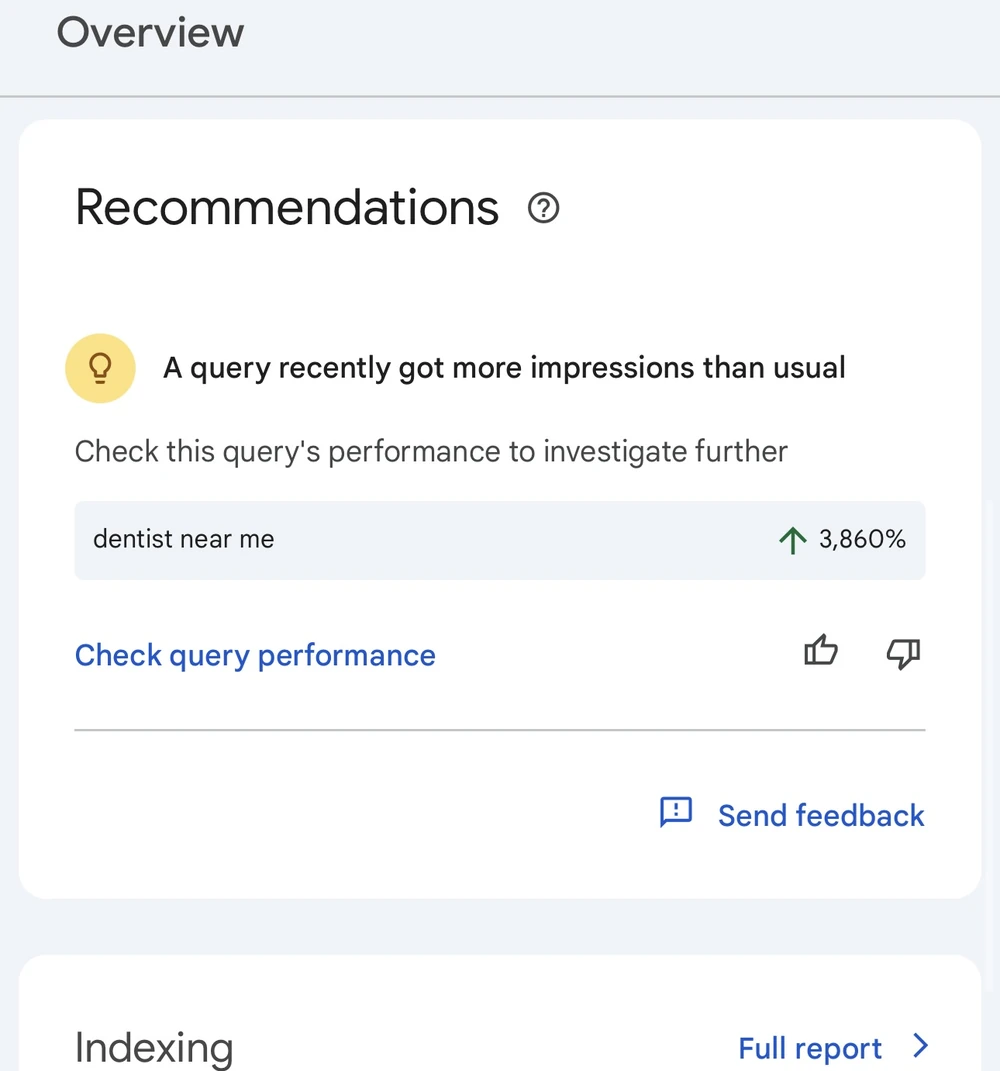
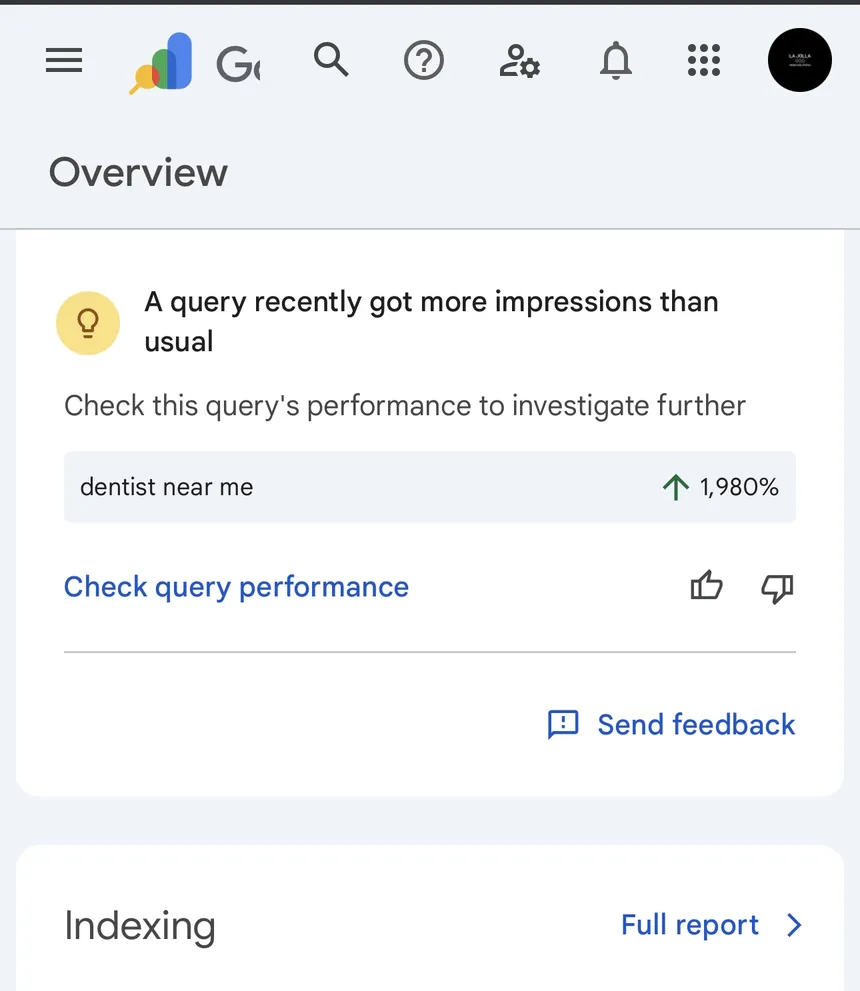
- An Austin dental practice saw a 1,980% increase in search impressions for “dentist near me” in the single week after an SEO rebuild. That’s one high-intent phrase moving quickly once the site was fixed, not overall traffic. Client-reported, from their own Search Console.
- A local business’s website leads grew by an average of 349% year over year across nine months, each month compared with the same month a year earlier. That’s the slower, compounding kind of result. Client-reported.
Neither is typical, because there’s no such thing: your trade, your competition and your starting point decide the pace. Every figure is published with its source on our results page.
Should I invest in local SEO or Local Services Ads first?
Short answer: If you need calls this month, ads come first. If you want leads that don’t stop when the budget does, start SEO now. Most service businesses in the Austin area end up doing both, because each covers the other’s gap.
| Local SEO | Local Services Ads | Google Ads | |
|---|---|---|---|
| How you pay | Time and effort, or an agency | Per lead | Per click |
| Speed | Weeks to months | Days | Days |
| When it stops | Keeps working for a while | When the budget stops | When the budget stops |
| Distance limits | Strong for the map pack | Wider reach across your service area | Target any area you choose |
| Best for | Long-term, lower-cost leads | Trades eligible for LSA, pay-per-lead control | Any business, full control over keywords |
Local Services Ads are changing in 2026: read what the move into Google Ads means for LSA. If you want to try paid search on your own, our guide on how to run Google Ads yourself walks through it step by step.
Can I do local SEO myself, or should I hire someone?
Short answer: You can do a lot yourself: complete your Business Profile, ask for reviews, and add real photos every month. Hire help when the website needs rebuilding, when you’ve plateaued, or when you simply don’t have the hours.
We’re a team of specialists based in Round Rock, and the first review of your local presence is free either way. If it turns out you only need the checklist above, we’ll tell you. When you want it done for you, that’s our local SEO service (here is what we do for Austin businesses), or call (512) 553-9675.
More local search questions
Can I rank in the map pack for a city where I don’t have an office?
It’s hard, because Google weighs the distance between your business and the person searching. You can still rank in the organic results for that city with a genuinely useful page, and reach it with paid ads.
Does Google let you pay for a higher local ranking?
No. Google states there’s no way to request or pay for a better local ranking. Paid placements, like Local Services Ads and Google Ads, appear separately and are labelled as ads.
Should I hide my address on Google Business Profile?
If customers don’t visit you, such as a plumber working from home, Google’s guidelines say to hide the address and set a service area instead. If customers do come to you, show it.
Do keywords in my business name help my ranking?
Adding keywords that aren’t part of your real business name breaks Google’s guidelines and can get your profile suspended. Use your real name and put the keywords into your services, categories and website instead.
How many Google reviews does a local business need?
There’s no magic number. What matters is how you compare with the businesses you compete with for the same searches, and that reviews keep coming in. A business with 40 recent reviews often beats one with 200 that stopped two years ago.
Is local SEO different in Round Rock than in Austin?
The rules are the same, but the competition isn’t. Austin has more businesses competing for each search, while in Round Rock and the rest of Williamson County, fast population growth means a steady stream of new customers searching for services for the first time.
Abdullah Mahdi
Founder of Visible Owl. Leads SEO, AI search (GEO and AEO) and website development, and has built and ranked websites for small businesses since 2015.
Sources
- Google Business Profile Help: Tips to improve your local ranking on Google
- Community Impact: Austin metro grows to 25th most populous in U.S. with more than 2.5M residents (U.S. Census Bureau estimates)
- Texas Demographics: Round Rock population and income (U.S. Census Bureau estimates and 2024 American Community Survey)
- BrightLocal: Local Consumer Review Survey 2025
- U.S. Census Bureau QuickFacts: Round Rock, Georgetown, Williamson County, Austin, Travis County
Want more answers like this?
Add Visible Owl as a preferred source on Google, and our articles show up more often in your Top Stories and AI answers.
Button not showing? Add Visible Owl on Google.